



Foldable Rear Leg Dog Wheelchair


Foldable Rear Wheelchair for Small Dogs
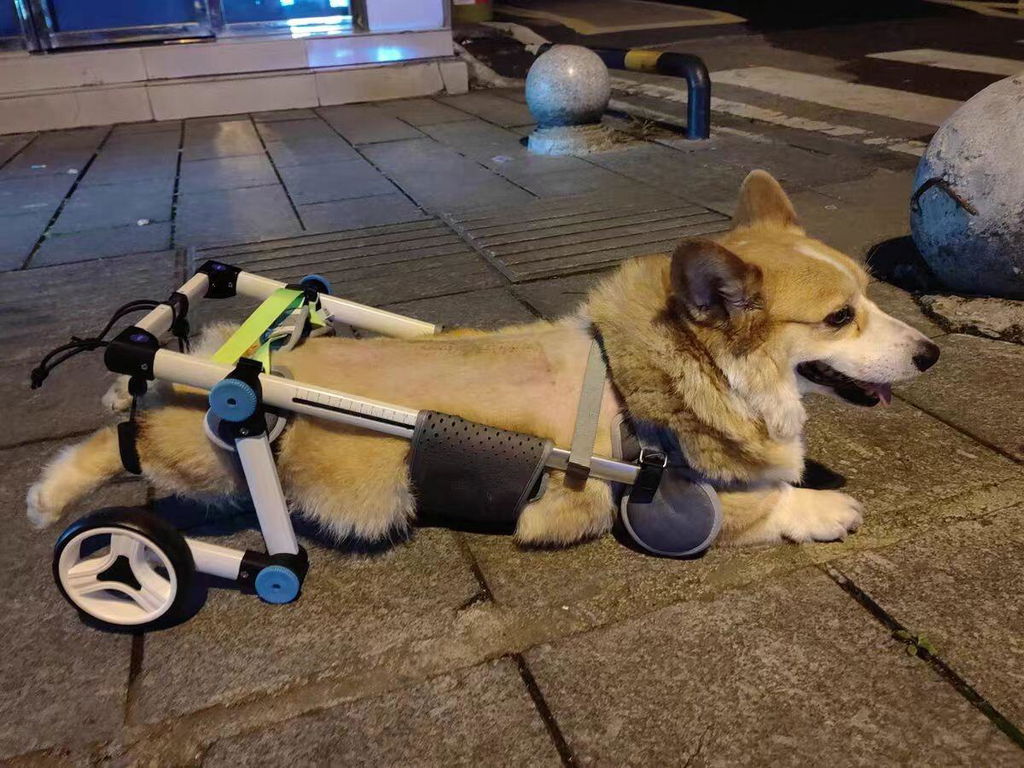
The only rear wheelchair that lets your dog rest without taking it off — designed for dogs who need to wear their chair all day.

Who is this wheelchair for?
This wheelchair is for small dogs with rear limb weakness or paralysis who need to spend most of their day in their chair. With a standard wheelchair, every rest means removing the equipment and refitting it when your dog is ready to move again — multiple times a day, every day. For dogs with severe mobility limitations, and for the people caring for them, that adds up quickly.
-
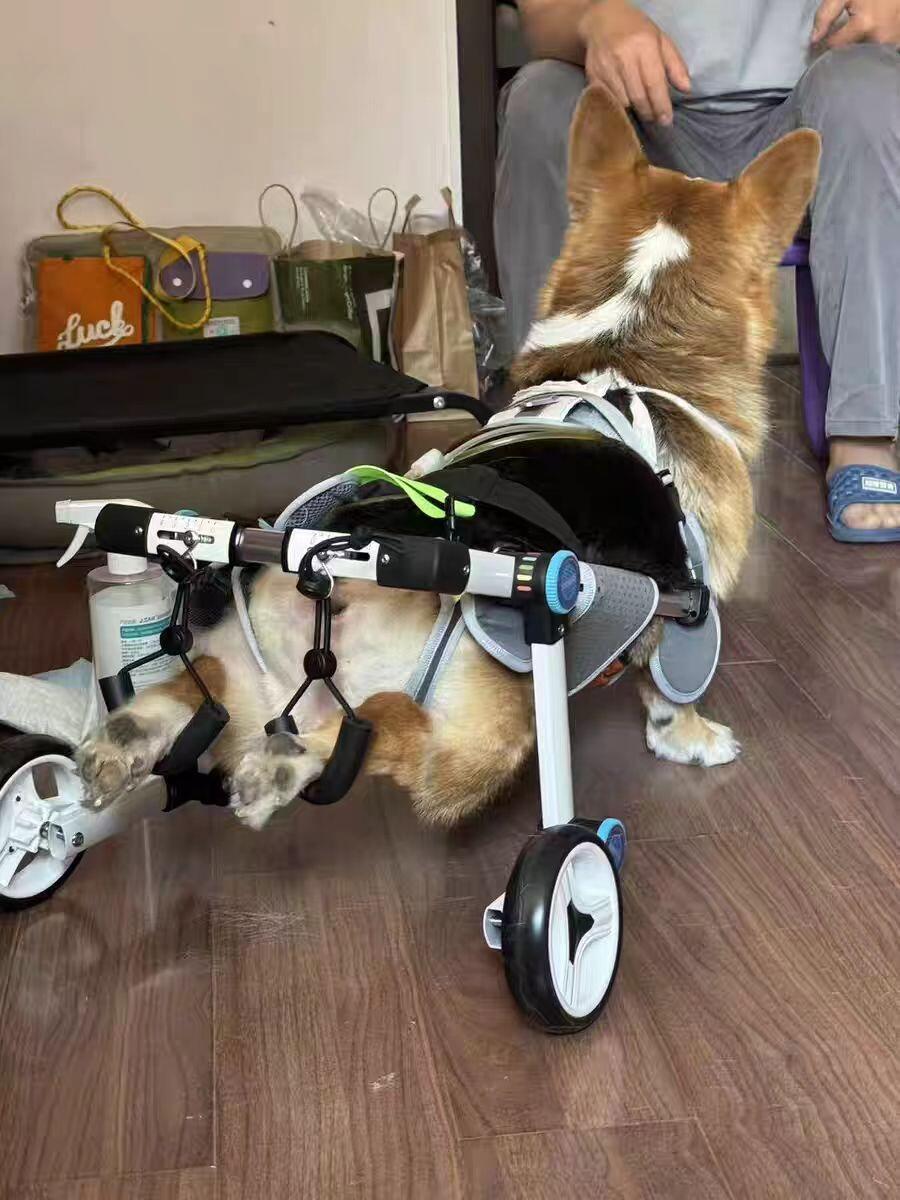
The C1 solves this with a folding rear support mechanism. When your dog wants to rest, the rear frame unlocks and moves freely with their body as they lie down. The wheelchair stays on. When they're ready to walk again, you lock the frame back into position in seconds.
-
Not sure if a rear-wheel chair is right for your dog, or want to understand more about how the folding mechanism works? Read our complete guide: How to Choose the Right Wheelchair for Your Dog
How the folding mechanism works
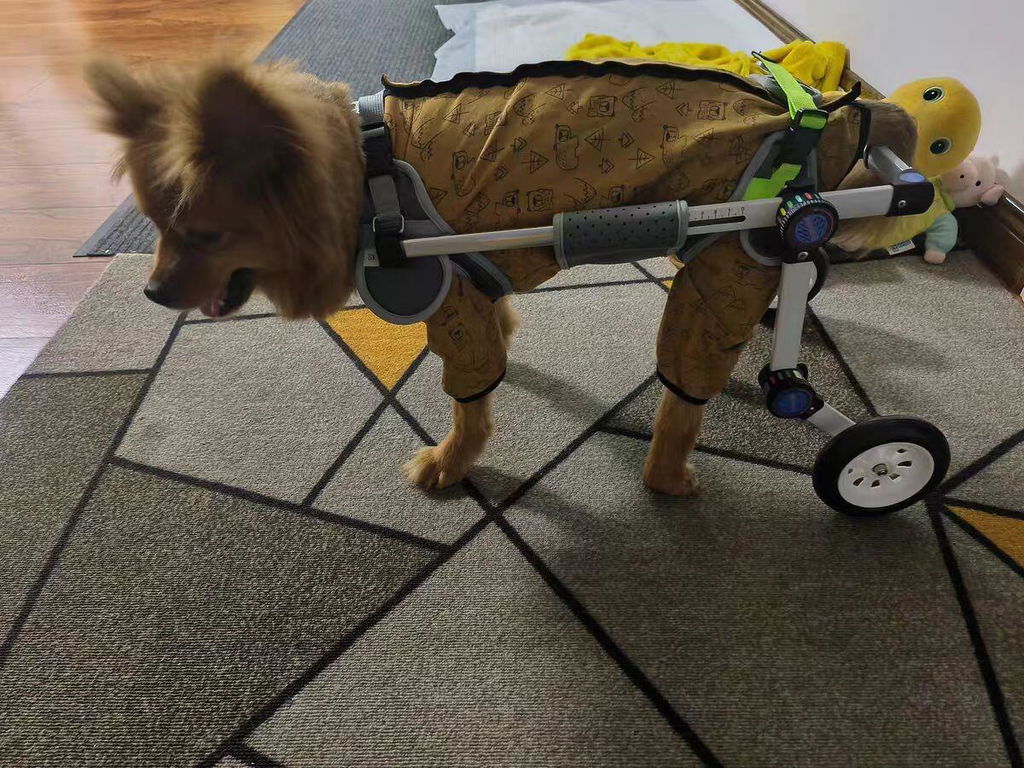
The rear support is made of two connected segments with a locking knob at the joint between them. During walking, you tighten the knob to lock the segments at the right angle for your dog's height — the chair behaves like any standard wheelchair.
-
When your dog wants to rest, loosen the knob. The joint between the two segments becomes free-moving, allowing the rear frame to follow your dog's body as they lower themselves to the ground. They simply lie down — no removal, no refitting. When they're ready to walk again, tighten the knob and the frame locks back into its walking position.
Why this wheelchair
- Foldable rear support — dogs can lie down and rest while wearing the wheelchair, without it being removed. The single most important feature for dogs in all-day use.
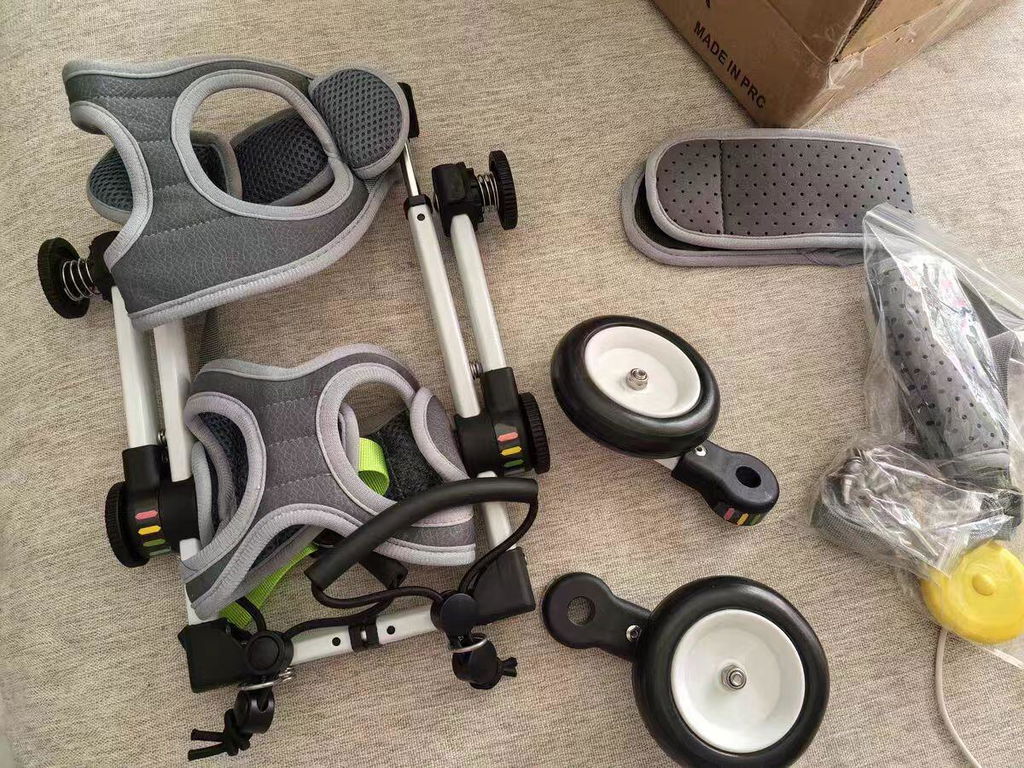
- Lightweight hollow aluminum frame — strong enough for daily use without adding unnecessary weight.
- Wide adjustment range — accommodates a broader range of body sizes than most small-dog wheelchairs, from very small breeds up to mid-size dogs.
- Adjustable straps and soft harness pads — secure and comfortable fit for different body shapes.
- Smooth-rolling wheels — stable on pavement, grass, and indoor floors.
- Portable and easy to store — folds down for travel, vet visits, and storage.
Ideal for
- Dogs who need to wear their wheelchair for most of the day
- Rear limb paralysis or weakness requiring long-term daily support
- IVDD and spinal cord conditions
- Degenerative myelopathy
- Post-surgery rehabilitation
- Senior dogs with age-related rear leg decline
- Owners who want to minimise the effort of daily fitting and removal
Size guide
Fit is determined by body measurements, not weight alone. Measure your dog's body length (neck base to tail base), back height (ground to hip), and body width (widest point of ribcage) while they are standing. These three dimensions are what determine the right size — weight is a reference point only.
See the size chart below to match your measurements to the right size.

Typical breeds: Yorkshire Terrier, Pomeranian, Chihuahua, Bichon Frise, Toy Poodle, Shih Tzu, Pug, French Bulldog, Corgi, Shiba Inu, Sheltie, Border Collie, Chow Chow, Samoyed — and kittens. If you're unsure, send us your measurements and we'll confirm the fit before you order.
Usage tips
- Start on flat surfaces for the first few sessions — grass and uneven ground can be introduced gradually.
- Begin with 5–10 minute sessions and increase duration as your dog adapts.
- When introducing the folding function, let your dog try lying down naturally — don't force the position during the first few sessions.
- Check the knob tension regularly to ensure it locks securely during walking.
- Keep the frame dry; wipe down after outdoor use.
Not sure this is the right fit?
Start here — most dogs need a rear-wheel chair, but it depends on which legs are affected:
| My dog's situation | Recommended type |
|---|---|
| Rear legs weak or paralysed, front legs healthy | Rear-wheel wheelchair |
| Front legs also weak or unreliable | 4-wheel wheelchair |
| Very elderly dog with overall body weakness | 4-wheel wheelchair |
| Post-surgery rear limb recovery, front legs fine | Rear-wheel wheelchair |
If a rear-wheel chair is right for your dog, here's how the models compare:
| Model | Best for | Key feature | Size |
|---|---|---|---|
| A1 — Lightweight | First-time users, sensitive dogs, warmer climates | Lightweight frame, breathable mesh | Small |
| A2 — Lightweight | Same as A1 for medium dogs | Lightweight frame, breathable mesh | Medium |
| A3 — Lightweight | Same as A1 for large dogs | Reinforced frame, 11" wheels | Large |
| B1 — Pro | Heavy daily use, long-term wear | Heavier-gauge frame, premium tyres | Small — XS, S |
| B2 — Pro Plus | Maximum comfort, wider size range, long-term daily use | Dual harness + vest leg support | Small — XXS, XS, XS-Wide, S |
| C1 — Foldable ← you are here | Dogs wearing wheelchair most of the day | Dog can rest without removing | Small–medium |
All rear-wheel models support dogs with rear limb weakness — the difference is in size options, comfort, and how long your dog needs to wear it each day. Still not sure? Click the 👋 icon in the bottom right corner to chat with us, or email us at contact@pawpattz.com — we're happy to help you find the right fit.


Real Solutions, Real Results
— Thoughtful Gear for Happy Pets!
⭐️⭐️⭐️⭐️⭐️

⭐️⭐️⭐️⭐️⭐️

⭐️⭐️⭐️⭐️⭐️

Frequently Asked Questions
This wheelchair is a game-changer for dogs with rear leg issues.
The perfect combination for my dog's needs after injury.
Wheels hold up well after months of use on different surfaces.
Adjustable width and height worked well for my two dogs of different sizes.
We use it on trails and pavement, and it handles both smoothly.
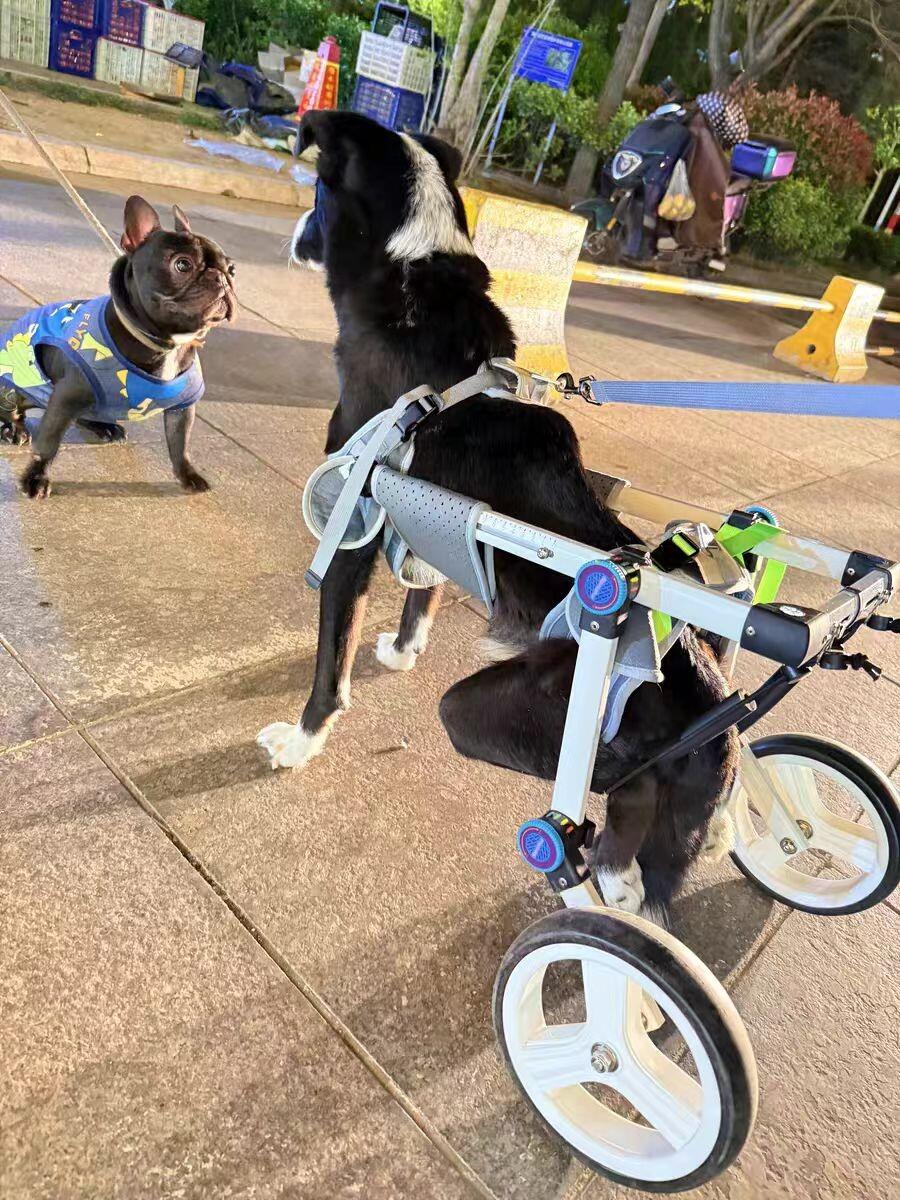
Easy to use, easy to clean, and really helped my dog's rehab.
Noticeable improvement in my dog's mobility within a week of use.
No slipping or loosening during walks. Very secure and safe.
My dog is much happier with this lighter wheelchair compared to the older one we had.
Had a question about sizing and support responded quickly and helped me pick the right size.
Soft padding prevents rubbing. My dog wore it for hours without discomfort.
Takes up little space when folded. Perfect for traveling with my dog.
Put it together in minutes, very clear instructions.
My old dog struggles less with this wheelchair. Definitely improved his quality of life.
Affordable and works well. My dog can move around without pain now.
The straps and padding are comfortable, and I can clean it easily after walks.
Frame is really light but feels strong. My dog enjoys using it outside on grass and pavement.
Bought this for my dog after hind leg surgery, and it really speeds up his rehab.
Overall good but the wheels make some noise on hard floors.
Adjustable straps made it easy to get a snug fit. Helps him move better every day.
Love that it folds so compactly. Took it to the vet without any hassle.
The aluminum frame is sturdy but light. My dog seems more comfortable already.
This wheelchair helped my dog walk again after surgery. Lightweight and easy to adjust.